Introduction
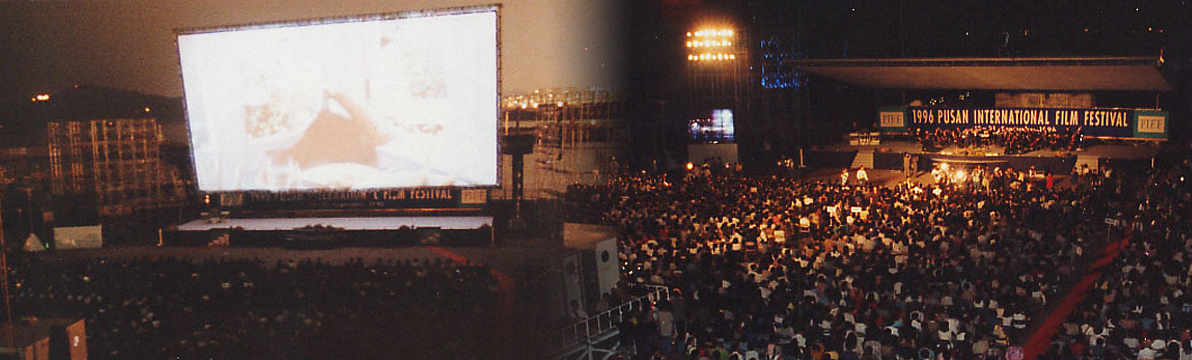
The Beginning of the Busan International Film Festival
On September 13, 1996, the first opening ceremony was held with the desire to create a 'small but prestigious film festival'. The first international film festival in Korea took its first step amidst many concerns about holding an 'International Film Festival' in Busan, and not Seoul. In the first festival, 169 works from 31 countries were invited and screened in a total of 6 theaters.
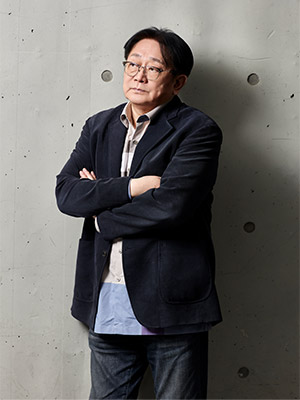
PARK Kwang-su Festival Chairperson
A leading filmmaker of the Korean New Wave that emerged in the late 1980s, he directed seven feature films, including Chilsu and Mansu (1988), Black Republic (1990), and A Single Spark (1995).
As one of the founders of the Busan International Film Festival, he helped shape the festival’s vision and lay the foundation for its future development.
From 1996 to 1998, he served as Deputy Director of the Busan International Film Festival, where he led the launch of the Pusan Promotion Plan (PPP, now the Asian Project Market, APM), helping establish the festival as a platform for supporting Asian cinema and fostering discussions on its future.
In 2006, he founded the Asian Film Market and served as its Director for two years. Since March 2024, he has served as Chairperson of the Busan International Film Festival.
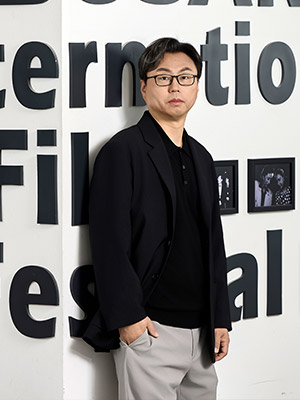
JUNG Hanseok Festival Director
Born in 1974, he studied film criticism and film theory in the Department of Film Theory at the School of Film, TV & Multimedia of the Korea National University of Arts (K-Arts).
He began his career as a film critic in 2002 after winning the Cine21 Film Criticism Award. He subsequently joined Cine21, where he worked as a film journalist and critic from late 2002 to early 2015. From 2006 to 2017, he taught film criticism in the Bachelor’s and Master’s programs of the Department of Film Theory at K-Arts.
A founding member of the film criticism journal FILO, launched in 2018, he has been a regular contributor since its inception. His publications include The History of the Film Movement(co-author, 2002), KIM Dong Won(2007), Jia Zhangke(2010), The Nature and State of Cinema(2017), Korean Independent Cinema in the 21st Century(co-author, 2023), and Being Bong Joon Ho(co-author, 2025).
He has served as a juror and advisor at various film festivals in Korea and abroad. From 2019 to 2024, he served as Korean Cinema Programmer of the Busan International Film Festival. He has served as Festival Director of the Busan International Film Festival since 2025.
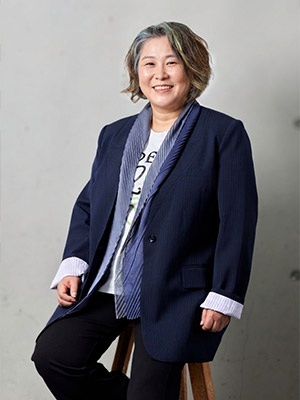
Ellen Y.D. KIM Asian Contents & Film Market Director
Korean, Born in October, 1968. Graduated from Seoul National University with a degree in Aesthetics, and completed graduate studies at the Cultural Studies Graduate School of Sungkonghoe University.
Ellen KIM entered the film industry in the late 1990s and has built extensive experience across production, film festivals, and international exchange, dedicating herself to introducing Asian cinema to the world and expanding platforms for collaboration. In 2001, she established Flying Tiger Pictures, whose productions include the Korean-Chinese-French co-production Cry Woman by LIU Bingjian, invited to the 2002 Cannes Film Festival, and Hanaan by Ruslan PAK, which premiered at the 2011 Locarno International Film Festival. In 2007, she joined bom Film Productions as a producer on HONG Sangsoo's Night and Day, invited to the 2008 Berlin International Film Festival. In 2011, she served as a director at Zamie Pictures, where she acquired and distributed films including My Back Page and Tyrannosaur. She also served as a programmer at the Bucheon International Fantastic Film Festival for twelve years, contributing to the discovery of Asian genre cinema. A founding member of ACFM in 2006, she returned as Director in 2024, continuing her role of connecting the vision and achievements of Asian cinema with the global film industry.
- Busan International Film Festival
- Largest Film Festival in Asia
 Asian Contents & Film Market (ACFM)
Asia’s esteemed content market, It is a comprehensive site of content business where transactions of original IPs ranging from film and audiovisual content, to books, webtoons, web novels, story treatments, and more, are accessible.
GO Busan Story Market
IP sales market where stories, the foundation for all content, are sold and purchased to be reproduced on various platforms
GO Asian Project Market (APM)
Asia's first investment and co-production market, which introduces promising Asian feature film projects in the stages of planning, development, or production, to individuals related to the film industry.
GO Asian Cinema Fund (ACF)
A support program established to help activate Korean and Asian independent film productions
GO Platform BUSAN
A networking platform where emerging Asian independent filmmakers can share their field experiences to enlighten artistic philosophies and exchange field experiences
GO BIFF Asian Film Academy (BAFA)
As an educational program, BIFF Asian Film Academy aims to discover promising filmmakers who will lead Asian cinema and establish networks among Asian filmmakers.
GO Forum BIFF
As a socializing hub for filmmakers and professionals from all over the world, Forum BIFF will provide the audience with an opportunity to experience a wealth of cinematic intelligence.
GO Community BIFF
Community BIFF aims to be an open film festival where audiences, filmmakers, activists, academics, and local residents become agents of the festival.
GO BIFF EVERYWHERE
The audience can join the festival with ease and share rich experiences with their neighbors, such as the screening of popular films from domestic and international film festivals, meetings with guests, and attending performances by local artists.
GOIn the early days of its establishment, it was simply focused on building the best film festivals in Asia and promoting Korean films to the world. Today, it is also serving as a bridgehead to promote Asian films to the world by discovering and supporting various films and talented filmmakers.
As a film festival that rose to the top in such a short period of time, the Busan International Film Festival played a decisive role in making Busan the center of the film industry as well as the city of film.
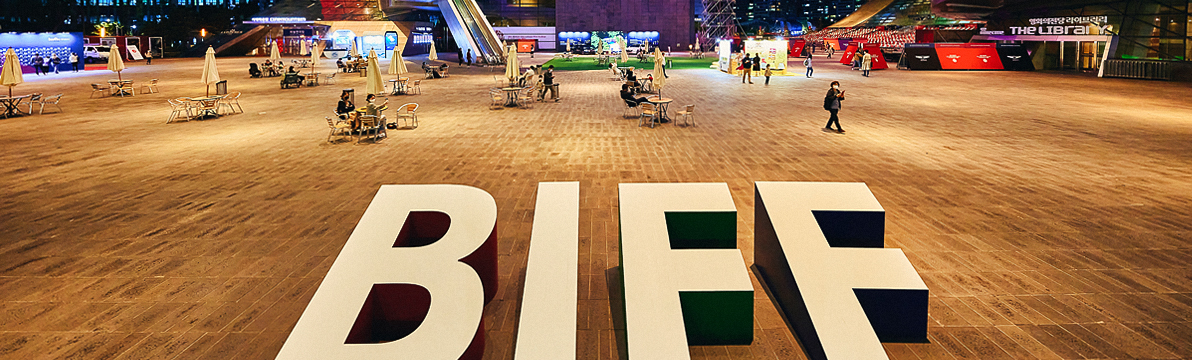
Vision of Busan International Film Festival
As it has been, the Busan International Film Festival will continue to seek ways to strengthen Korean and Asian films through various programs including production support, so they can be firmly established.
FIAPF-Accredited
A-List Film Festival (2026)
‘Busan Award - Best Film Award’, BIFF's Top Competition Prize, Qualifies Winners for Academy Awards® International Feature Film Submission (2026)
UNESCO Creative Cities of film
first in Asia (2014)
The most prestigious film festival in Asia
and one of the top 5 in the world (2017)
Time (USA)
UNESCO Fellini Award (2007)
The second time as a film festival after Cannes
The longest cantilever roof in the world
(the big roof at Busan Cinema Center)
certified by Guinness World Records (2011)
In particular, as the environment of the media market is changing faster than before, the film festival redeemed its overall strategy and set out mid-to-long-term visions and strategic tasks to move forward with a more distant future.
Although it has already been recognized as the best film festival in Asia and the hub of Asian films, it is making efforts to reset and expand the vision to "Hometown of Asian Films" and leap forward as the world's best film festival and Asian film hub.